 how-to
How to Clean Makeup Brushes Without Damaging Bristles
Last Updated: October 23, 2026
Quick Summary
To clean makeup brushes without damaging the bristles, wet only the bristles with lukewarm water, add a pea-sized drop of gentle cleanser, and swirl the brush in small circles across your palm. Keep the brush angled down so water never reaches the ferrule, then squeeze out excess water and dry the brush head-down.
- Never soak a brush up to the ferrule, because water dissolves the adhesive and causes shedding.
- Swirl bristles in small circles on your palm instead of scrubbing them flat.
- Reshape the brush head while it is still damp, since a splayed brush is hard to fix once dry.
- Clean foundation brushes every 1-2 uses and powder brushes every 1-2 weeks.
- Use baby shampoo for natural bristles and diluted dish soap for synthetic ones.
Table of Contents
- Why Regular Brush Cleaning Matters for Bristle Health
- How to Wash Makeup Brushes: Step-by-Step Without Damage
- How to Dry Makeup Brushes to Preserve Shape
- How Often to Clean Makeup Brushes for Your Skin Type
- Best Makeup Brush Cleaner Options for Delicate Bristles
- Protecting the Ferrule and Adhesive During Cleaning
- Natural vs. Synthetic Bristles: Care Differences
- Troubleshooting: Shedding, Stiffness, and Stubborn Residue
- Frequently Asked Questions
Why Regular Brush Cleaning Matters for Bristle Health
Dirty brushes wreck both your skin and the bristles. When makeup residue, oil, and grime build up, they harden the brush head and weaken the glue holding it together.
Here is what actually happens inside a dirty brush:
- Makeup residue clogs the base of the brush head and stiffens the bristles
- Oil and dirt travel down toward the ferrule, the metal band that holds the brush head
- Bacteria multiply in the warm, damp center of the brush, which is bad for skin hygiene
A clean brush applies makeup better and lasts longer. The American Academy of Dermatology's guidance on cleaning makeup tools notes that shared or dirty tools can spread irritation and breakouts, which is why regular cleaning matters for skin hygiene.
How to Wash Makeup Brushes: Step-by-Step Without Damage
The safe method: wet only the bristles, use a gentle cleanser, swirl with care, and rinse with lukewarm water.
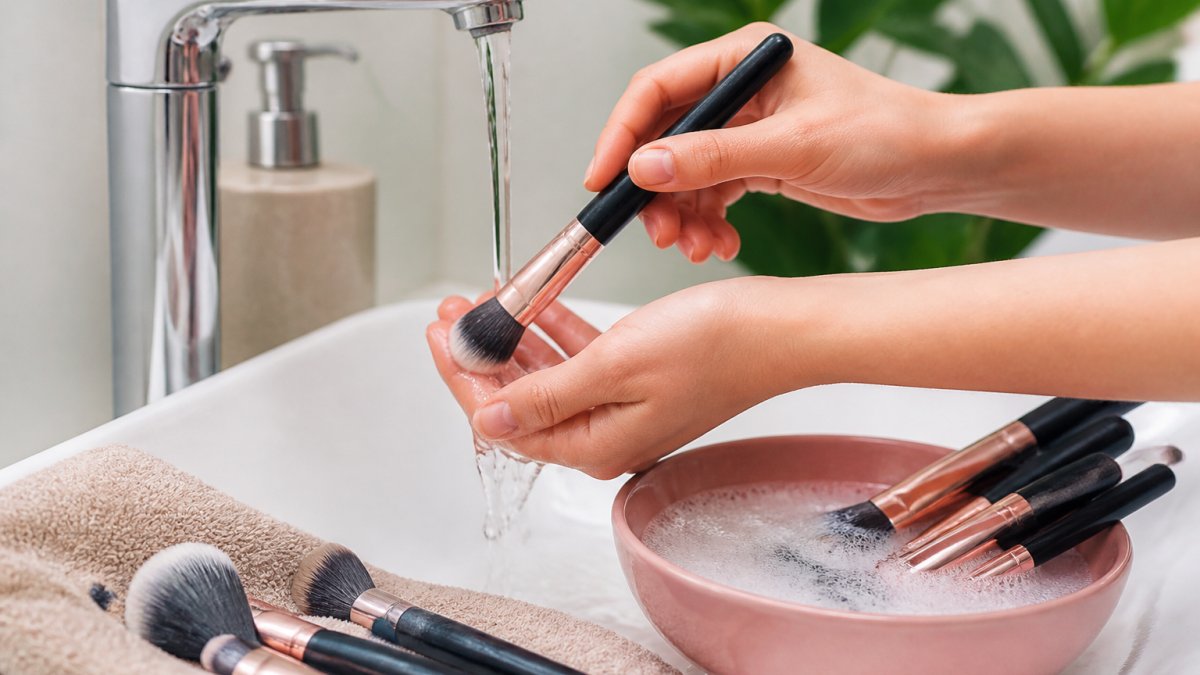
- Wet the bristles only. Hold the brush head down and let lukewarm water run over the tips. Never point the handle up under a tap.
- Add a small amount of gentle cleanser. A pea-sized drop of soap or a dedicated brush cleanser is plenty.
- Swirl and massage. Work the bristles in a circular motion across your palm. This lifts makeup residue and grime from the base of the brush head.
- Rinse with lukewarm water. Keep the brush angled down. Squeeze gently from the ferrule toward the tip to flush out loosened product.
- Repeat if needed. A foundation brush may need two rounds. A powder brush usually needs one.
- Squeeze out excess water. Use a folded paper towel. Never twist or pull the bristles.
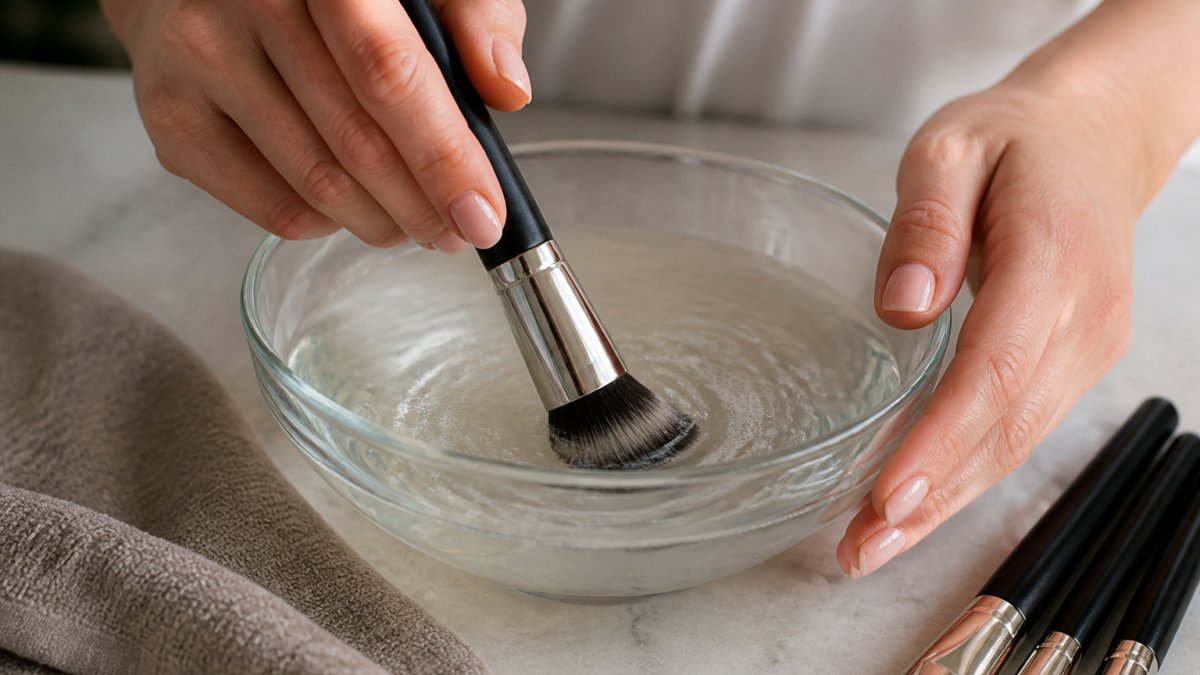
Choosing the Right Cleanser
Pick a cleanser that breaks down oil without stripping the bristles:
- Dish soap cut with a little olive oil for synthetic bristles
- Baby shampoo for natural bristles, since it is mild and conditions
- A dedicated makeup brush cleaner designed for delicate bristles
Avoid harsh detergents, alcohol-heavy formulas, and anything with strong fragrance. These dry out bristles and make them brittle.
The Washing Process: Gentle Motions
Motion matters more than product. Swirl in small circles; never scrub the brush head flat against your palm or press hard enough to bend the bristles. Scrubbing harder pushes residue deeper and weakens the adhesive.
How to Dry Makeup Brushes to Preserve Shape
Drying is where most brushes get ruined. Reshape the bristles and air-dry with the brush head angled down, so water drains away from the ferrule.
Follow these rules:
- Squeeze out water with a folded paper towel, tip to base
- Gently reshape the brush head with your fingers while damp
- Lay the brush flat on a paper towel with the head hanging just off the edge
Air-Drying Techniques That Protect Bristles
Never dry brushes with bristles pointing up, water runs into the ferrule and softens the adhesive. Never use a hairdryer on high heat either, since heat makes synthetic bristles curl and natural bristles brittle.
A quick-dry trick: place brushes near a fan or in a dry, airy spot. Most brushes air-dry within a few hours. Thick foundation brushes take longer.
How Often to Clean Makeup Brushes for Your Skin Type
How often to clean makeup brushes depends on what the brush touches and how often you use it. These ranges work for most people.
| Brush Type | Cleaning Frequency | Why |
|---|---|---|
| Foundation brush | Every 1-2 uses | Liquid product traps bacteria fast |
| Eye makeup brush | Weekly | Color buildup and eye sensitivity |
| Powder brush | Every 1-2 weeks | Less moisture, slower buildup |
| Sponge | After each use | Damp and highly absorbent |
Oily or acne-prone skin needs more frequent cleaning; sensitive skin benefits from a gentle cleanser and a strict weekly routine. If you use one brush daily, clean it more often than a brush in a large set.
Best Makeup Brush Cleaner Options for Delicate Bristles
The best makeup brush cleaner is not the strongest one, it lifts makeup residue and oil without stripping the bristle shaft or leaving residue that stiffens the brush head.
How the main cleanser families behave on delicate bristles:
- Baby shampoo: Mild surfactants and a low pH make it a safe default for natural bristles. It cleans light product well but struggles with silicone-based foundation and long-wear formulas. It can leave a faint conditioning film, so rinse longer than you think you need to.
- Dish soap: Excellent at cutting oil and silicone, which is why it works on synthetic foundation brushes. The trade-off is that repeated use strips natural bristles and can leave synthetic fibers feeling dry and stiff. Use it diluted, and not every wash.
- Bar soap: Convenient and effective on powder buildup, but soap scum can collect at the base of the brush head if your water is hard. Rinse thoroughly and avoid pressing the bristles flat into the bar.
Ingredient cautions that matter more than the label:
- High-alcohol formulas evaporate fast and can make natural bristles brittle and synthetic fibers tacky.
- Strong fragrance and essential oils add no cleaning power and can irritate sensitive skin when residue remains on the brush.
- Harsh detergents and sulfates clean aggressively but strip the natural oils that keep hair bristles supple.
Match the cleanser to what the brush actually touches:
| Brush use | Best cleanser fit | Why |
|---|---|---|
| Liquid foundation, concealer | Diluted dish soap or dedicated liquid cleanser | Cuts silicone and oil without soaking the ferrule |
| Powder, blush, bronzer | Bar soap or baby shampoo | Lifts dry pigment without over-stripping |
| Cream blush, cream contour | Oil-based cleanser, then mild soap | Dissolves waxes, then removes residue |
| Natural hair bristles | Baby shampoo or conditioning brush cleanser | Preserves suppleness |
| Synthetic bristles | Mild soap or dedicated liquid cleanser | Resists stripping and holds shape |
A practical rule: if a cleanser leaves bristles squeaky and stiff after drying, it is too harsh. If it leaves them tacky or greasy, it did not rinse clean.
When you shop for supplies, look for clear, accurate product descriptions. Pemarch curates beauty supplies with precise, translated details.
Protecting the Ferrule and Adhesive During Cleaning
The ferrule is the metal band connecting the bristles to the handle, and the adhesive inside it is the most fragile part of any brush. Keep water and cleanser on the bristles and away from the metal.
Practical safeguards:
- Hold the brush head down at all times while washing
- Never submerge the brush past the base of the bristles
- Avoid soaking brushes in a bowl for long periods
If the ferrule takes on water, the adhesive softens and the brush head loosens. Once a brush sheds from the base, it rarely recovers.
Natural vs. Synthetic Bristles: Care Differences
Natural and synthetic bristles are not interchangeable when washing, and treating them the same is a common reason brushes wear out early. The difference comes down to how each fiber interacts with water, oil, and heat.
Natural bristles (goat, squirrel, sable, pony hair) are porous. They absorb water and product, take longer to dry, and can swell slightly when wet. They also carry natural oils that keep them supple, and harsh cleansers strip those oils. The care implications:
- Use a mild, conditioning cleanser such as baby shampoo or a dedicated brush cleanser. Avoid dish soap on a regular basis.
- Do not soak them. Natural hair absorbs water quickly, and prolonged soaking pushes moisture toward the ferrule.
- Reshape while damp and dry fully, natural bristles can develop a musty smell if stored damp.
Synthetic bristles (taklon, nylon, polyester) are non-porous. They repel water, dry faster, and hold their shape well, but they have their own failure modes:
- They can curl or warp under heat, so never use a hot hairdryer or place them near a radiator.
- They tolerate mild soap and diluted dish soap well, but repeated harsh detergent use can make the fibers feel stiff and scratchy.
- They dry faster than natural bristles, but a dense synthetic foundation brush still needs several hours, do not put it away damp.
Side-by-side care differences:
| Factor | Natural bristles | Synthetic bristles |
|---|---|---|
| Water absorption | High, swells and dries slowly | Low, repels water, dries faster |
| Cleanser fit | Mild, conditioning formulas | Mild soap or dedicated liquid cleanser |
| Heat tolerance | Low, heat causes brittleness | Low, heat causes curling and warping |
| Conditioning need | Yes, to preserve suppleness | Not needed; focus on residue-free rinsing |
| Main risk | Drying out, musty odor, water damage at ferrule | Curling, stiffness from harsh detergent |
| Reshaping | While damp, gently | While damp, firmly but without bending |
A natural-hair powder brush and a synthetic foundation brush should not share one cleaning routine. Match the cleanser, water exposure, and drying method to the bristle type, and both will last longer and apply makeup more evenly.
Troubleshooting: Shedding, Stiffness, and Stubborn Residue
Most brush problems have a fix, but a few signal the end of a brush's life:
- Shedding from the base: usually water damage to the adhesive. Dry the brush head-down and stop soaking it. If shedding continues, the ferrule is compromised.
- Stiff bristles: leftover soap or product residue. Rinse more thoroughly and use a gentler cleanser.
- Stubborn residue: work in a small amount of oil-based cleanser, then follow with mild soap. Do not scrub harder.
Clean sponges separately, they hold far more water and product, so washing them alone avoids transferring grime back onto clean brushes.
Gentle cleanser, lukewarm water, careful swirling, and head-down drying protect the bristles and the ferrule. Do it on a schedule that matches your skin and brush type, and your brushes will apply makeup better and last far longer.
Frequently Asked Questions
How do you clean makeup brushes without ruining the bristles?
Use lukewarm water and a gentle cleanser, and avoid soaking the brush above the ferrule. Swirl the bristles in the palm of your hand or a cleaning mat, then rinse thoroughly. Gently squeeze out excess water with a paper towel and reshape the brush head before air-drying it flat or bristles-down. Never pull or tug on bristles, and avoid hot water, which can weaken adhesive and damage both natural and synthetic hairs.
What is the gentlest way to wash makeup brushes?
The gentlest method is to wet only the bristles, apply a small amount of mild soap or brush cleanser, and massage the bristles in circular motions using your palm. Rinse with lukewarm water until it runs clear. For daily quick cleaning, use a no-rinse spray on a paper towel and swirl the brush to remove surface makeup. Avoid harsh detergents, rubbing alcohol, and vigorous scrubbing, which can strip natural oils and cause shedding.
Can you use dish soap or shampoo to clean makeup brushes?
Dish soap can cut through oil-based makeup, but it may be too harsh for natural bristles and can strip moisture. Shampoo is a safer choice for natural hair brushes because it is formulated to clean gently. For synthetic bristles, a mild dish soap diluted with water works well. Always rinse thoroughly to remove all residue, and follow with a conditioner for natural bristles if they feel dry.
How often should you clean makeup brushes?
Clean foundation and concealer brushes at least once a week to prevent bacteria buildup and product clogging. Powder and blush brushes can go two weeks between washes. Eye makeup brushes should be cleaned weekly or more often if you have sensitive eyes or use liquid products. For quick cleaning between deep washes, use a spray cleaner after each use to remove surface makeup and extend time between full washes.
Dirty brushes cost you money and clear skin, and the fix is a routine you can build in minutes. Pemarch makes that routine easier by offering beauty supplies with precise, accurate product details, so you order the right cleanser and tools the first time. Our advanced translation tools bring clarity to every listing, and our curated catalog helps you find reliable everyday essentials without guesswork. Shop now at Pemarch and give your brushes the care they deserve.