 listicle
Best Tools for Home Organization 2026: Top Picks
Table of Contents
- Why the Best Tools for Home Organization 2026 Start With a Plan
- How We Chose the Best Tools for Home Organization 2026
- Home Organization Tools for Small Spaces: Vertical and Hidden Storage
- Kitchen Organization Tools That Cut Counter Clutter
- Closet Organization Products: Hangers, Dividers, and Bins
- Budget Home Organization Ideas Under $60
- Pemarch Picks: Three Tools That Earn Their Place
- Conclusion: Build a System, Not a Shopping List
- Frequently Asked Questions
Last Updated: October 19, 2026
Why the Best Tools for Home Organization 2026 Start With a Plan
Most people buy storage bins before they count what needs storing.
Shoppers often want a specific product, then discover it does not fit the shelf, the drawer, or the door. A plan prevents that.
Start with three numbers. Measure the shelf depth, the drawer width, and the wall space you can actually use.
Consumer product safety guidance on furniture and storage anchoring is worth a read before you mount anything heavy on a wall, particularly in homes with children.
How We Chose the Best Tools for Home Organization 2026
Our selection criteria are deliberately boring: does the item hold its shape, does it fit standard shelving, and does it survive daily use.
We grouped candidates by room and household need, then filtered for durability, sizing compatibility, and cost per useful litre of storage. Accessibility mattered too. A bin on a high shelf is not storage if nobody can reach it.
The table below summarizes how we weigh each factor.
| Criterion | What We Check | Why It Matters |
|---|---|---|
| Sizing fit | Matches standard shelf and drawer depths | Prevents returns and wasted spend |
| Durability | Holds shape under daily load | Long-term cost stays low |
| Accessibility | Reachable without a step stool | Systems actually get used |
| Material | Recyclable or long-life construction | Reduces replacement churn |
| Cost per litre | Price divided by usable capacity | Compares options fairly |
Home Organization Tools for Small Spaces: Vertical and Hidden Storage
Small-space organization works on one principle: use the walls and the gaps, not the floor. Vertical storage and under-bed storage reclaim space that already exists in a rental without drilling into anything structural.
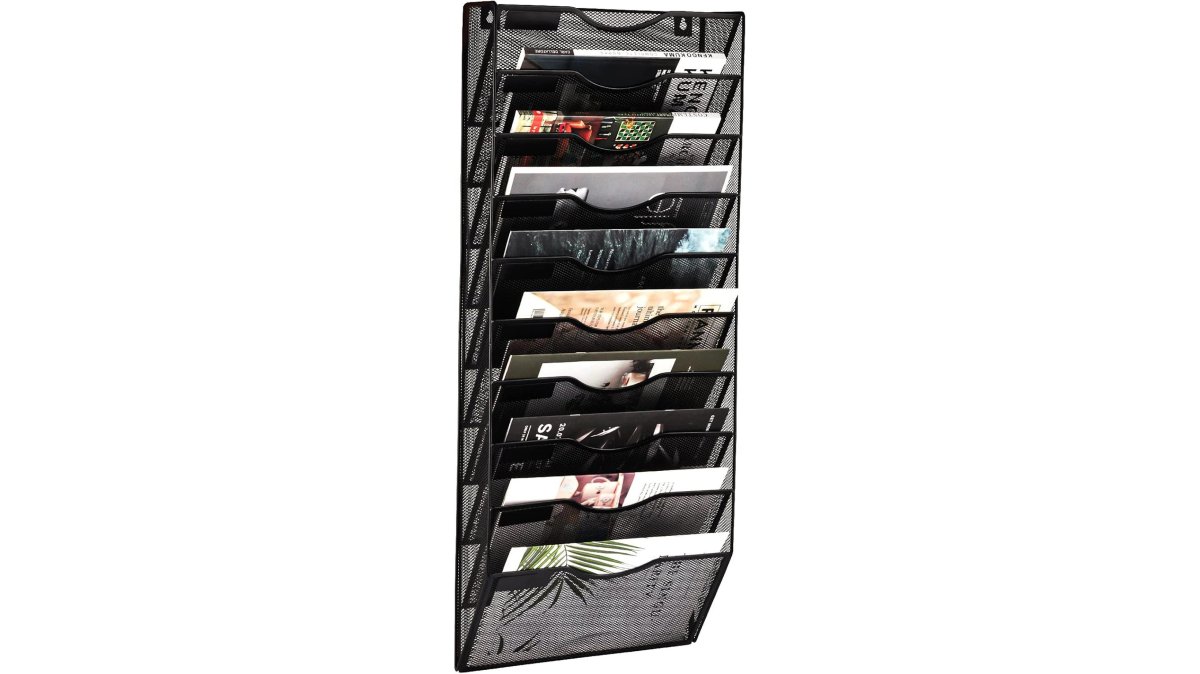
Wall-mounted organizers are the highest-value purchase in a small flat. A mesh wall file organizer holds mail, papers, and stationery in stacked tray levels, which clears a desk surface entirely. The 10 Pocket Mesh Hanging Wall File Organizer uses label panels to allow for labeling contents of each slot, and it comes with mounting screws to take advantage of vertical space.

Renters should favour tension rods, over-door hooks, and freestanding units. Hidden storage under beds and inside ottomans absorbs seasonal items without adding furniture.
Kitchen Organization Tools That Cut Counter Clutter
Kitchen clutter is a volume problem disguised as a space problem. Counter appliances, charging cables, and loose utensils consume the same square metre every day. The fix is to give each category a defined zone.
A multi-device charging dock removes the tangle of cables that spreads across a counter. The 5 Port Multi USB-A Charging Station charges up to five devices in one place with seven short cables included and removable dividers for tablets.

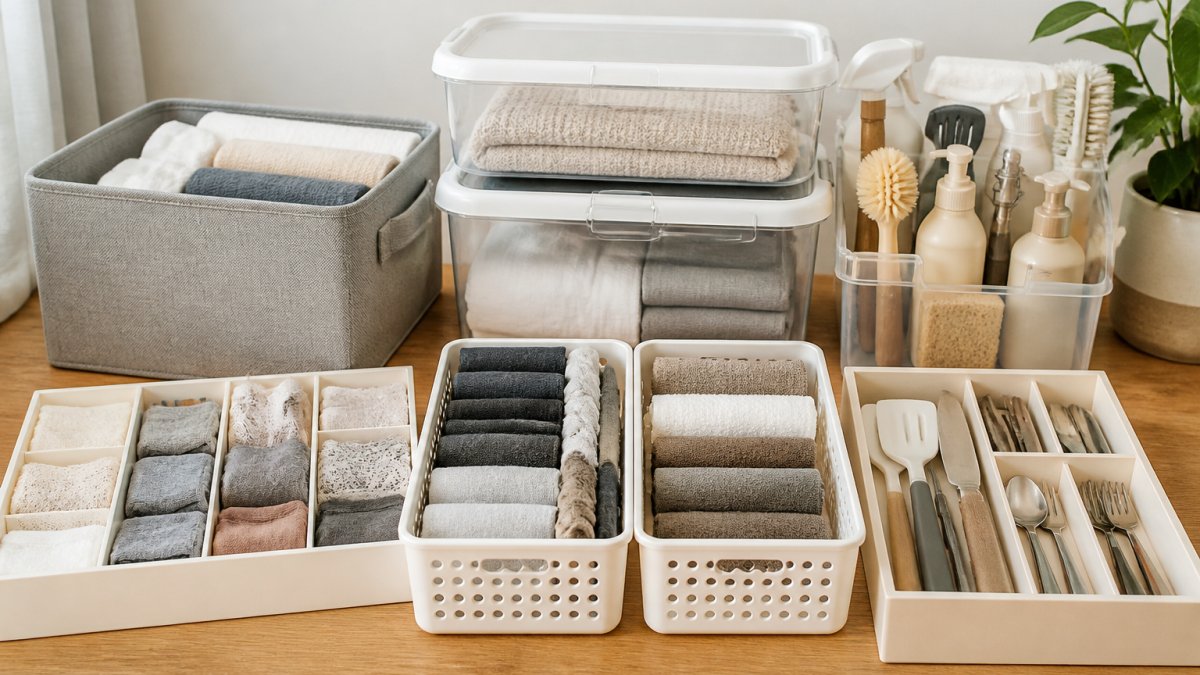
Drawer dividers, stackable clear bins, and airtight containers handle dry goods. Clear bins win on visibility; airtight containers win on freshness. Label both.
Closet Organization Products: Hangers, Dividers, and Bins
Closets fail for a simple reason: hanging space gets used for items that should be folded. Matching hanger types, in felt or slim profiles, recovers rod length immediately. But hangers alone will not fix a closet, the section below covers the sizing checks, zone layout, and accessibility details that separate a closet that stays organized from one that collapses within a month.
Start with three measurements, not three products
Before buying a single hanger or bin, measure the closet's usable depth, the rod height, and the shelf-to-ceiling gap. Standard closet depth is around 24 inches, but many rental closets are shallower, and a bin that is 18 inches deep will not slide onto a 16-inch shelf. A common pattern is to buy bins first and discover they do not fit the shelf, the same mistake the audit section warns against.
Zone the closet by height, not by category
Divide the closet into horizontal zones. High shelves take seasonal bins and rarely used items. The mid-rail takes daily clothing. Low space takes shoes and baskets. Drawer dividers keep small items from migrating. The key sizing rule: daily-use items should sit between roughly waist and shoulder height, with heavier bins lower and lighter seasonal items higher. That single rule does more for long-term organization than any specific product.
The core tool list, with fit notes
- Felt or slim-profile hangers for delicate and slippery fabrics. Slim hangers recover rod length, but check that the hook fits your rod diameter, thicker wooden rods can bind on thin metal hooks.
- Stackable bins for off-season clothing on the top shelf. Measure the shelf depth first; a bin that overhangs the shelf edge is a tipping hazard.
- Drawer dividers for socks, accessories, and small-item storage. Adjustable dividers fit more drawer widths than fixed ones.
Accessibility belongs in this section, not as an afterthought
If a household member uses a wheelchair or has limited reach, the daily-use zone should sit between roughly waist and shoulder height, with heavier items lower. Easy-open bins, lids with a finger pull or a cut-out handle, matter more than aesthetics for anyone with limited grip strength. Visibility matters too: clear bins let you see contents without lifting the lid, which reduces the reach-and-search cycle that makes systems fail.
The buying mistakes that cause returns
The most common closet-organization returns come from three fit failures: bins that are too deep for the shelf, hangers that do not match the rod, and dividers that do not match the drawer width.
Budget Home Organization Ideas Under $60
Budget-friendly organization is about buying fewer, better-fitting items. Three well-chosen tools beat ten impulse buys. But a budget conversation that stops at the sticker price is incomplete, the real question is cost per year of use, not cost at checkout. This section covers both: a spending plan for a limited budget, and the durability math that determines whether a cheap tool is actually cheap.
10 Pocket Mesh Hanging Wall File Organizer, Wall Mounted Mail Paper Document →
How to spend a limited budget across the home
Here is how we would spend a limited budget, prioritized by how much clutter each tool removes per dollar:
| Priority | Tool | Typical Spend | Where It Goes |
|---|---|---|---|
| 1 | Wall or desk file organizer | Under $65 | Desk, entry, home office |
| 2 | Drawer dividers | Under $20 | Kitchen and bedroom drawers |
| 3 | Stackable clear bins | Under $30 | Closet shelves, under-bed |
| 4 | Labels and a label maker | Under $25 | Every bin above eye level |
| 5 | Over-door hooks | Under $15 | Doors and cupboard backs |
The Desk File Organizer Mesh 6-Tier is a strong option for home offices. It can be used on doors, walls, or on a desk, with hooks whose width can be adjusted among 3"-3.5", 1.2-1.7", and 0-0.55" for different panels. No installation or drilling is needed for the hanging setup, which makes it renter-friendly as well as budget-friendly.

The long-term cost math most budget guides skip
A metal organizer that lasts a decade costs less per year than three plastic trays that crack. That is the durability principle behind sustainable organization, and it is worth doing the arithmetic before buying.
European Commission guidance on waste reduction and product durability outlines the durability principle behind that math. The practical takeaway: when two tools cost within a few dollars of each other, choose the one with the longer expected life and the more repairable construction.
Renter-friendly budget picks
Renters should favor tension rods, over-door hooks, and freestanding units, because they avoid drilling and move with you. A tension rod under a sink or in a closet costs little and adds a hanging zone without a single hole. Over-door hooks turn dead door space into storage for a few dollars. These are the highest-value purchases in a rental, because they are reversible and portable.
What not to buy on a budget
Skip multi-purpose items that do several things adequately. A single-purpose bin that fits your shelf exactly will outlast three combination units that fit nothing well. Skip bins without listed interior dimensions, and skip anything that requires a tool you do not own to assemble. The budget mistake is not buying cheap, it is buying twice.
Pemarch Picks: Three Tools That Earn Their Place
Three items from our own range can help with common organization needs: paper clutter, desk clutter, and cable clutter.
1. 10 Pocket Mesh Hanging Wall File Organizer, $62.14. Best for households drowning in mail and paperwork.
2. Desk File Organizer Mesh 6-Tier, $28.76. Best for remote workers and students.
3. 5 Port Multi USB-A Charging Station, $53.49. Best for families with several devices.
Conclusion: Build a System, Not a Shopping List
The trap in home organization is treating it as a purchasing exercise. A system beats a shopping list every time, because a system defines where an item returns to after use.
Our advice is to audit first, measure second, and buy third. For shoppers who want accurate specifications before ordering, ISO guidance on product information and consumer clarity reflects the standard we aim for in every listing.
Frequently Asked Questions
What are the best tools for organizing a home in 2026?
The best tools depend on the room, but three categories cover most needs: vertical wall organizers for paper and mail, drawer dividers and clear bins for small items, and stackable or under-bed storage for seasonal goods. Start with the area that causes the most daily friction, measure the space, and buy one tool that fits that measurement. A wall-mounted file organizer, for example, clears desk clutter without taking up floor space.
How do I choose the right storage tools for my home?
Measure the space first, then match the tool to the job. Check internal dimensions, not just external ones, and confirm the material suits the room: powder-coated mesh for offices and utility areas, fabric bins for shelves, airtight containers for kitchens. Read customer reviews for real-world durability notes, and avoid buying a full matching set before testing one piece in the actual spot.
What are the best organization tools for small spaces?
Vertical storage wins in small spaces. A 10-pocket wall file organizer uses wall height instead of desk or floor area, and a hanging 6-tier desk organizer can mount on a door, cubicle panel, or wall with no drilling. Under-bed bins and stackable containers handle seasonal items. The key is to use height and hidden zones, then label each slot so the system survives daily use.
How can I organize my home on a budget?
Focus on one room at a time and buy only after decluttering. Budget home organization ideas include using vertical wall racks, drawer dividers made from existing boxes, and clear bins for like items. Set a per-room cap, compare value against durability, and check return policies. A $28 hanging desk organizer or a $53 multi-device charging station can replace several smaller purchases.
What tools help keep a kitchen organized?
Kitchen organization tools should reduce counter clutter and keep daily items reachable. Clear airtight containers group dry goods, drawer dividers separate utensils, and a multi-device charging station keeps cables and tablets off the counter. Measure cabinet depth before buying bins, and place the most-used items at eye level. Wipe surfaces and re-sort containers monthly to stop clutter from returning.
Clutter returns when a system has no maintenance routine. Pemarch curates household and electronic accessories with precise descriptions, so you know the dimensions and materials before you buy. Our catalogue covers vertical storage, desk organizers, and charging solutions, backed by clear specifications and a 12-month satisfaction guarantee on selected items. Shop now and build a system that holds.