 listicle
Best Beauty Tools for Personal Care: 2026 Review
Table of Contents
- How We Chose the Best Beauty Tools for Personal Care
- Best Skin Care Tools and At-Home Facial Devices
- At-Home Facial Tools: Rollers, Gua Sha and Depuffing
- Beauty Gadgets for Daily Routine: Hair Removal and Nails
- How to Clean Beauty Tools and Keep Them Safe
- Safety, Realistic Results and When to See a Dermatologist
- Budget, Cost Per Use and Choosing by Need
- Conclusion
- Frequently Asked Questions
Last Updated: October 17, 2026
How We Chose the Best Beauty Tools for Personal Care
The best beauty tools for personal care are the ones that match a specific job, a realistic routine, and a hygiene plan you will actually follow. At Pemarch, we stock beauty supplies and household goods for international shoppers, so we judge every device on three things: what it claims, what it needs from you, and how easy it is to keep clean.
Below, we explain how to pick at-home skincare and beauty tools by category, with honest limits on results and a cost-per-use view that keeps budgets sane.
Our selection criteria, in order of weight:
- Clear purpose. One device, one job. Multi-head gadgets win only when the heads are genuinely different.
- Skin contact quality. Hypoallergenic stainless steel, smooth stone, or sealed medical-grade surfaces. Rough edges and loose fittings cause irritation.
- Cleaning design. Detachable heads, waterproof bodies, and no crevices that trap residue.
- Power and portability. Rechargeable batteries with visible charge indicators beat sealed disposable units.
- Cost per use. Divide the price by realistic uses per year, not by how often you hope to use it.
Best Skin Care Tools and At-Home Facial Devices
Skin care devices split into two families: cleansing and treatment. Cleansing brushes and micro-cleaning systems handle daily maintenance. Light therapy and microcurrent units aim at longer-term concerns like fine lines, skin texture, and firmness. Buy for the job you have, not the job in the advertisement.
LED Light Therapy and Microcurrent Devices
LED light therapy uses specific wavelengths, with blue light aimed at acne-prone skin and red or near-infrared light used for the appearance of fine lines and skin tightening. Microcurrent and nanocurrent devices send low-level electrical currents through the skin to stimulate facial muscles. Both are low-risk, at-home treatment categories when used as directed, and both demand patience. Expect weeks of consistent use before you judge results, and expect subtle change rather than transformation.
At-Home Facial Tools: Rollers, Gua Sha and Depuffing
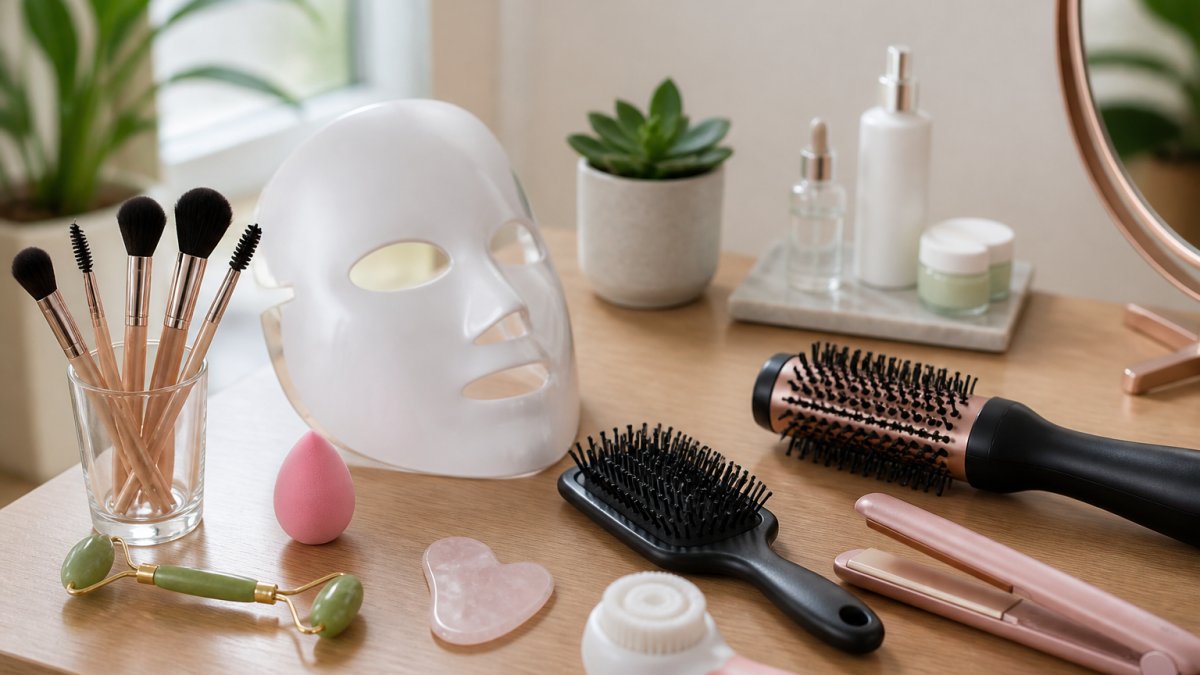
Facial rollers and gua sha stones are the lowest-risk entry point into at-home facial tools, and they are also the category where marketing outruns evidence the most. A rose quartz roller or a smooth stone edge supports facial massage, helps with morning puffiness, and pairs well with a lightweight oil for glide. The honest framing: these tools are best understood as a two-to-five-minute massage and cooling ritual, not a treatment for fine lines, sagging, or acne.
What the tool actually does
A roller or gua sha applies light mechanical pressure and, if chilled, cold therapy to the face.
A workable technique for either tool:
- Start with clean skin and a thin layer of carrier oil, never drag a dry stone across the face.
- Use light pressure. If the stone leaves a red mark that lasts more than a few minutes, you pressed too hard.
- Roll or scrape outward and upward from the center of the face, following the direction of lymph flow toward the jawline and neck.

A carrier oil makes the difference between a smooth glide and a drag. Our Pure Fractionated Coconut Oil is a lightweight, non-greasy option for massage and facial tool work, and the 32 fl oz bottle lasts through months of daily use.
Material and shape: what to look for
- Stone type. Rose quartz, jade, and stainless steel all work; the differences are weight, cooling retention, and durability. Stainless steel chills fastest and is the easiest to sanitize. Porous or cracked stones are a hygiene problem, replace them.
- Edge quality. Run a finger along the gua sha edge. Any roughness, chip, or seam will scratch skin. Smooth, polished edges are non-negotiable.
- Shape. A roller with a large head suits cheeks and jaw; a smaller head suits under-eye area. A gua sha with a comb edge and a concave edge covers more of the face than a single-curve stone.
Safety and when to skip it
Rollers and gua sha are low-risk, but not risk-free. Skip the tool, or ask a dermatologist first, if you have:
- Active eczema, psoriasis, or dermatitis on the face
- Broken skin, cold sores, or an active acne breakout with open lesions
- A history of easy bruising or a bleeding disorder
Never share a roller or gua sha with anyone else, and do not use a stone that has been dropped and chipped. A chipped edge is a scraping tool, not a massage tool.
Realistic expectations and cost per use
A roller or gua sha is a one-time purchase with no consumables beyond the oil, so the cost per use is low if you actually use it. A $15-$30 stone used five mornings a week for a year works out to pennies per session. The value case collapses only if the tool sits in a drawer, which is the most common outcome for any beauty tool bought on impulse.
Beauty Gadgets for Daily Routine: Hair Removal and Nails
Daily-routine gadgets earn their place only if they cut time or friction. A rechargeable electric shaver with hypoallergenic blades and a waterproof body replaces disposable razors, works wet or dry, and handles legs, underarms, and bikini line in one pass.

Our 4-in-1 Electric Shaver for Women ships with beard, eyebrow, and nose/ear trimmer heads plus four limit combs, runs about 90 minutes on a 1.5-hour charge, and has an IPX7 waterproof body with a detachable head for direct washing.
Nail care is the other high-frequency category. Press-on systems have moved well beyond drugstore strips. Our 120-piece press-on nail set comes in coffin, stiletto, square, oval, and almond shapes with a non-slip design, at $2.55 for the full box.
Electric Shaver for Women, 4-In-1 Electric Razor, Painless Shaver Bikini →

How to Clean Beauty Tools and Keep Them Safe
Cleaning is where most beauty routines quietly fail. Residue on a cleansing brush, shaver head, or stone becomes a breeding ground for bacteria, and bacteria-fighting claims on packaging mean nothing if the tool itself is dirty.
A workable weekly routine:
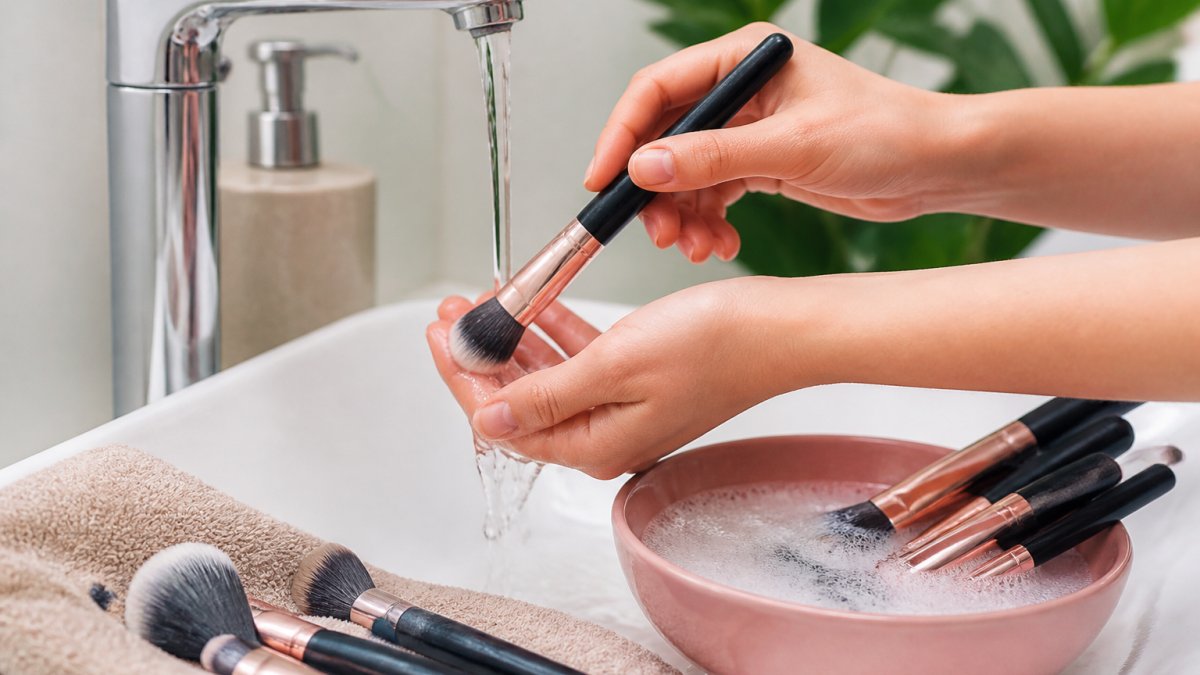
- Wash detachable heads with warm water and mild soap, then air-dry fully before reassembly
- Wipe device bodies with a damp cloth; never submerge a unit that is not rated waterproof
- Rinse stone tools under running water and dry with a clean towel, never a shared bathroom towel
Safety, Realistic Results and When to See a Dermatologist
Realistic expectations are the difference between satisfaction and refund requests. At-home devices deliver gradual, modest change. They do not replicate in-clinic results, and any listing that promises otherwise is overselling.
Here is what the evidence picture generally supports, and where caution belongs:
| Tool type | Realistic outcome | Timeline | See a dermatologist if |
|---|---|---|---|
| LED light therapy | Subtle improvement in skin texture and appearance of acne | 6-12 weeks of regular use | Cystic acne or scarring |
| Microcurrent | Temporary firmness and plumping | Immediate, hours-long | You have implants or a pacemaker |
| Facial roller / gua sha | Reduced morning puffiness, relaxation | Same day | You have active eczema or broken skin |
| Electric shaver | Clean hair removal, less irritation than blades | Immediate | Persistent razor burn or infection |
| Spot/mole pen | Cosmetic spot appearance only | Varies | Any mole that changes shape, colour, or size |
That last row matters. Our Beauty Freckle Removing Mole Spotting Pen is a rechargeable, five-gear cosmetic device for spot appearance. Guidance from the NHS on moles and skin changes is a sensible starting point for what warrants a professional look.

Budget, Cost Per Use and Choosing by Need
Most beauty-tool roundups organize by product, which forces readers to compare apples to LED masks. A more useful approach is to organize by need, then by budget tier, then by the ongoing cost the listing never mentions. That is the framework below.
Step 1: Name the job before the device
Start with the task, not the gadget. The table below maps common personal-care jobs to tool categories, with a realistic price band and the ongoing cost to expect.
| If your need is... | Tool category to start with | Typical upfront price | Ongoing cost to budget for |
|---|---|---|---|
| Daily hair removal | Rechargeable electric shaver | $20-$60 | Replacement heads every 6-12 months |
| Nail upkeep or art practice | Press-on nail sets | $3-$15 per set | Rebuy per set; adhesive or glue |
| Morning depuffing | Roller or gua sha plus carrier oil | $15-$30 for the tool; oil extra | Oil replacement; stone replacement if chipped |
| Cosmetic spot appearance | Spotting pen | $15-$30 | None beyond charging |
| Long-term skin concerns | LED or microcurrent device | $50-$300+ | None, but requires weeks of consistent use |
| Facial cleansing | Cleansing brush or device | $30-$200 | Replacement brush heads every 3 months |
Step 2: Calculate cost per use honestly
Cost per use is the only pricing metric that matters, and it is simple: price divided by realistic annual uses, not by how often you hope to use it. A $200 device used twice is worse value than a $24 shaver used three times a week. Work it out before you buy:
- High-frequency tools (shaver, nail sets, cleansing brush) earn their cost quickly because you use them weekly or daily. A $24 shaver used three times a week is under $0.20 per use in year one.
- Treatment devices (LED, microcurrent) o
Conclusion
Building a routine around the best beauty tools for personal care is not about collecting devices. It is about covering the jobs you actually do, at a cost per use that holds up over a year, with a cleaning routine you will keep.
At Pemarch, we list every specification, head type, and charging detail on the product page so you know exactly what arrives. Browse our beauty and personal care selection and shop now.
Frequently Asked Questions
What beauty tools are worth buying for personal care?
Start with tools you will use at least three times a week. A rechargeable facial cleansing brush, a rose quartz roller for depuffing, and a quality electric trimmer cover most daily needs. LED light therapy and microcurrent devices cost more and need consistent use over eight to twelve weeks before you see changes in skin texture. Buy one device at a time, learn how to clean beauty tools properly, and add the next item only when the first has become a habit.
Which beauty tools are best for an everyday skincare routine?
Daily tools should be quick, low-effort and easy to sanitise. A silicone cleansing brush, a cooling roller kept in the fridge, and a soft makeup applicator fit a five-minute morning routine. Save microcurrent and LED sessions for two or three evenings a week. The best skin care tools for daily use are the ones with a smooth surface you can wipe down in seconds, because hygiene matters more than gadget count when you use something every day.
Are beauty devices safe to use at home?
Most at-home facial tools are low-risk when you follow the instructions and keep them clean. Skip microcurrent, LED and microneedling devices if you are pregnant, have active acne, take photosensitising medication, or have a pacemaker. Stop using any tool that causes redness lasting more than a few hours. For mole and spot removal pens, get a dermatologist to check the lesion first, because at-home treatment cannot rule out anything serious.
How do you clean and maintain beauty tools?
Clean anything that touches skin after every use. Wash brush heads and trimmer blades with mild soap and warm water, then dry fully before storing. Wipe rollers, gua sha stones and device handles with alcohol-free wipes. Replace cleansing brush heads every three months and trimmer blades when they start pulling. Store tools in a dry case away from the bathroom sink spray, and never share razors, nail tools or extraction tools with anyone else.
Which personal-care tools are suitable for sensitive skin?
Choose tools with hypoallergenic stainless-steel or medical-grade silicone surfaces, and avoid anything with coarse bristles or strong suction. A wet-and-dry electric shaver with R-shaped blades reduces irritation compared with a manual razor, and a smooth stone roller is gentler than a spiked one. Patch-test new devices on your inner arm for 24 hours. If your skin reacts to a tool, stop for two weeks before trying a different type.